
People struggle to access weight loss drugs on the NHS
Between 2023 and 2024, 64.5% of adults aged 18 years and over in England were estimated to be overweight or living with obesity. In adults, overweight and obesity are associated with long term life-limiting conditions, such as Type 2 diabetes, cardiovascular disease, and some cancers.
Obesity costs the NHS about £11.4 billion each year.
In 2022, 45% of adults were trying to lose weight, with prevalence higher amongst men and women who were living with obesity (77% of women and 68% of men living with obesity).
The NHS and council-run public health departments provide support for weight management, including a range of information, apps and structured programmes involving exercise and lifestyle changes. There are more intensive programmes for people with the severest problems, including bariatric surgery.
The introduction of weight loss drugs
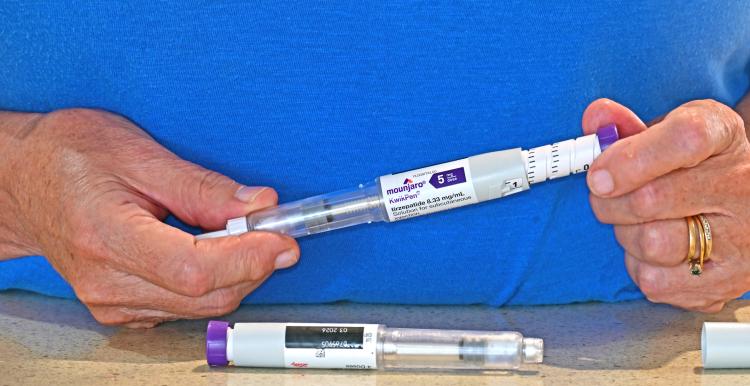
People may not find it easy to lose weight or maintain a healthy weight. For this reason, the decision by the NHS to roll out access to the diabetes drug tirzepatide (also known by its brand name, Mounjaro) for weight loss was welcomed. Initially, it was available only via specialist weight management services, but from June 2025, it became available via NHS GPs, for up to 220,000 patients in the first three years of a 12-year roll-out.
NHS England produced commissioning guidance to Integrated Care Boards (ICBs) on how to roll out the service in local GP surgeries. ICBs can roll out access using one of four models, including direct access via a GP and via a specialist weight management service.
The eligibility criteria for getting treatment from your GP are that you must have:
- A body mass index (BMI) of at least 40, and
- At least four of the following conditions – high blood pressure, high blood cholesterol, heart disease, type 2 diabetes and obstructive sleep apnea.
There is a lower BMI threshold, usually reduced by 2.5 kg/m2, for people from South Asian, Chinese, other Asian, Middle Eastern, Black African or African-Caribbean ethnic backgrounds.
People getting Mounjaro for weight loss also get access to dietary and physical activity advice.
What people are telling us?
We identified four key themes from the experiences people shared with us about asking for NHS funded weight loss drugs:
Access to weight loss drugs can transform people’s lives
People who had access to Mounjaro – privately or from an NHS GP or specialist weight management service – described the positive impact that taking weight loss drugs had on their weight and state of health after multiple past attempts to lose weight:
“I have struggled with my weight for 15 years. I put on around 35 kgs. I rejoined a slimming group around 6 times and tried every diet fad under the sun, losing a few kilos here and there before putting them back on. I ended up with high blood pressure, Type 2 diabetes and cholesterol. In January I had a meeting with my GP and diabetic nurse. They have been absolute life savers. I was prescribed Tirzepatide in February 2025 (as both my diabetic medicines were not controlling my blood sugar) and have lost 20 kilos over the last 5 months. My sugars are finally normal and I’m slowly reducing my various medications. I finally feel like so have the tool I need to help me eat healthily, under my calorie deficit and stick to it long term. I am just so grateful to my surgery and the NHS.”
Story shared by Healthwatch West Sussex
Some people believed it had unexpected, positive side-effects, such as helping with symptoms of menopause or Polycystic Ovary Syndrome (PCOS), although it is not licensed for treating these conditions by the medicines regulator.
“I have been begging for a hysterectomy for years and put on a range of medication to help PCOS. Mounjaro has been the surprise that fixes my symptoms, I haven't had mouth ulcers since I started it and have more energy."
Story shared with Healthwatch England
People experience a postcode lottery of access to NHS-funded weight loss drugs
Whilst the NHS England commissioning guidance was published in June, we were hearing in September that in some areas ICBs hadn’t agreed which model they would be implementing locally.
People who were eligible for help reported their frustration:
“I visited my GP to discuss access to Mounjaro for weight loss. Although I meet NICE guidelines criteria the process for prescribing in Sheffield is not rolled out yet. My GP was very supportive and anxious too for clear guidance to support this weight loss initiative for this meeting the initial criteria.”
Story shared with Healthwatch England
In those areas where access is via a specialist weight management service, people told us that they had been put on a long waiting list for treatment.
“I tried to get Mounjaro from GP. She said I would have to go on the TIER 3 weight management scheme, it would be a long wait and I probably wouldn't get Mounjaro for 2 years. In the end I decided to get a private prescription.”
Story shared with Healthwatch England
Fewer than half of all ICBs have rolled out GP-led Mounjaro prescribing, according to a British Medical Journal investigation using Freedom of Information data published in September.
We have since seen statements on various ICB websites warning patients that the number of eligible patients in their area will be ‘very small’, advising them not to contact their GP to request the drug, or stating that they have not yet rolled out a local scheme.
People are forced to go private, face rising drug costs or miss out altogether
As the previous story shows, people who can’t access NHS funded weight loss drugs feel they have no option but to go private to access the weight loss drugs that they felt they needed.
People told us that access to weight loss drugs was the only way they would lose enough weight to have a vital operation, and they were making big financial sacrifices to afford a private prescription.
The recent price increase of Mounjaro has meant that people might not be able to continue to afford a supply. We heard about people switching to Ozempic or a lower dose so that they could continue to lose weight.
Someone who had tried to get weight loss drugs to help with their lipoedema was unable to get them from their consultant or their GP and talked about the impact of having to give up entirely. They had got into debt to afford the drugs but had lost over 50kg:
“The recent price increase of Mounjaro has absolutely floored me. I spent two days in tears when the price rises were announced and managed to buy one last pen at the original price. The price had been £200 and is now £310. I spoke to a local pharmacist and was quoted £540 – beyond comprehension. My next dose is due in two days’ time and - for the first time - I do not have a pen. I don’t know what will happen when the medication wears off. I am absolutely rigid with terror that I will gain back all the weight I’ve lost.”
Story shared with Healthwatch England
The impact on diabetics
Ozempic and Mounjaro are drugs which originally were formulated to help people manage their diabetes. Due to the demand for these medications to help with weight loss, pharmacies have experienced a surge in prescriptions that has outstripped supply.
As a result, people with diabetes have experienced difficulties in getting their prescription fulfilled:
“I was on Ozempic for 12 months and it has made a massive difference to my type 2 diabetes which was controlled at the time. I then started having difficulties getting my prescription fulfilled in my local pharmacist and how to present approximately six other pharmacists be told there was a national shortage and could not get it and after a period of about three months of not having my injection, I gave up requesting it and took myself off of it.”
Story shared with Healthwatch England
A new policy under intense scrutiny
Concerns shared with us have also been raised by charities, clinicians and other experts in submissions to an ongoing parliamentary inquiry into Food and Weight Management. The Health and Care Committee has heard warnings about unmet demand and inconsistent implementation, as well as fears about the widening existing health inequalities for people who live in deprived areas or come from certain ethnic minority backgrounds, who face a disproportionate burden of obesity-related conditions.
MPs have also heard calls for a longer-term, funded and national obesity strategy to widen access to weight loss medications, alongside behavioural interventions and food industry measures.
The government said in its submission to the inquiry that while it recognised there would be “some commissioning differences”, that ICBs “do have a legal duty to make the funding available for treatments recommended in NICE technology appraisals in line with the timescales set out by NICE in its guidance”. Funding allocated to each ICB however is fixed for 25-26, doesn’t increase as patients come forward and is not ring-fenced.
The government has also yet to solve data collection issues, including separating out whether Mounjaro has been prescribed for weight loss or diabetes treatment. Collecting data from primary care generally on obesity is also a ‘key challenge’, the government’s submission states and it can’t currently collect national data on the number of private prescriptions issued for these drugs.
What we are calling for
Until the Health and Care Committee completes its inquiry and makes recommendations to Government, we are urging:
- GPs, specialist weight loss services, ICBs and public health departments of councils, to give the public clear information about the criteria for access to weight loss drugs in their area, including the lower BMI thresholds for people from some ethnic minority backgrounds as well as the likely level of provision and waiting times.
- ICBs and services to take caution in warning people against contacting their GPs about availability of weight loss drugs, as this may deter people from seeking health advice altogether and missing out on other weight loss interventions.
- NHS England to collect and publish figures about the number of people who have accessed Mounjaro via NHS GPs, by local authority and ICB area, to understand any gaps in provision.


