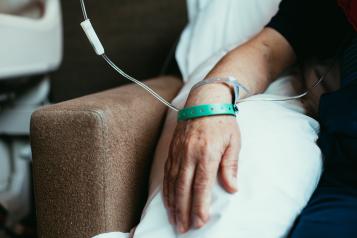
Cancer care: Why your voice matters

Cancer remains one of the UK's most pressing public health challenges. Over three million people currently live with cancer, and it's the leading cause of death in the UK.
Effective prevention, early diagnosis, and timely cancer treatment save lives, and that's why it's so essential that NHS services work well.
Patients can play an important role in ensuring this happens by speaking up about what's working and what is not regarding cancer care.
You might think, "What's the point? The NHS won't listen." But public feedback about care helps services spot problems and find new ways to improve support.
Every story has the power to spark change
Cancer services need to meet the needs of a wide range of people, and they don't always get things right. Your story of care can help NHS staff walk in your shoes and understand how they can better support different patients.
Sharon from Sunderland spoke up and helped the NHS improve how it supports people with learning disabilities.
In 2021, the NHS sent Sharon an invitation for a routine mammogram. The letter was 'easy read', a format Sharon requested because of her learning disabilities. Easy read is a way of sharing information that uses easy words, short sentences, and pictures to help people understand it.
However, when the mammogram results meant Sharon had to be asked back to the hospital for further tests, the new letter was not easy to read.
"When I received the letter to go to the hospital I didn't know what it said, as it wasn't in easy read"
Sharon shared her story with her local Healthwatch, who discovered that although the breast screening invitation letter template produced by Public Health England for local hospitals is available in easy read, the additional letter templates for patients being recalled to a service were not. This issue could cause people to miss essential follow-up tests.
Healthwatch raised the issue with Public Health England, which made all the letter templates available in an easy read format. These are now used by local services throughout England.
Lorna is another person whose story helped improve cancer care. After her disabled daughter was unable to attend a cervical screening due to the lack of hoists in local clinics, Lorna teamed up with her local Healthwatch to highlight the issue.
Research highlighted that many disabled women are not being screened for cervical cancer. This is because many GP offices and medical centres don't have hoists or other equipment to help staff lift patients onto examination tables.
"As a non-disabled person, I can easily access these services," Lorna explained. "But other people can't so they're not getting the care they need. I even heard of one case of a woman, who already had a history of pre-cancerous cells, needing a general anaesthetic for her examination because there weren't any hoists available in her area."
Using the evidence, Lorna reached out to NHS England, the Department of Health and Social Care, and her MP to push for change.
Every experience helps build a case for action
Your positive or negative feedback also adds to the evidence base that services need to understand how they can continue improving care.
Public feedback shows many positives in cancer care, such as:
- Quick turnaround for results
- Clear instructions for screening kits
- Compassionate and empathetic staff
However, people's stories have also revealed some troubling trends:
- Barriers to Screening: Vulnerable groups face challenges. Parents struggle to attend appointments due to childcare, trauma survivors lack support, and cultural stigma discourages some communities from participating.
- Referral Problems: Some patients feel their GPs dismiss or delay referrals. Others report referrals being rejected or bounced between hospitals, causing stress and delays.
- Misdiagnosis: Cases of misread biopsy results and incorrect diagnoses have led to delayed treatment.
- Slow Test Results: Delays in receiving scans, biopsies, and other test results hinder timely diagnosis.
More people need to have their say
We have highlighted these national and local issues with the NHS so they can learn from your stories.
But more people need to speak up. Our research shows that six in ten people don't remember giving feedback to NHS or social care services.
You can help by taking action today.